Culture
India’s UNESCO Heritage List Expands to 78 with Five New Additions
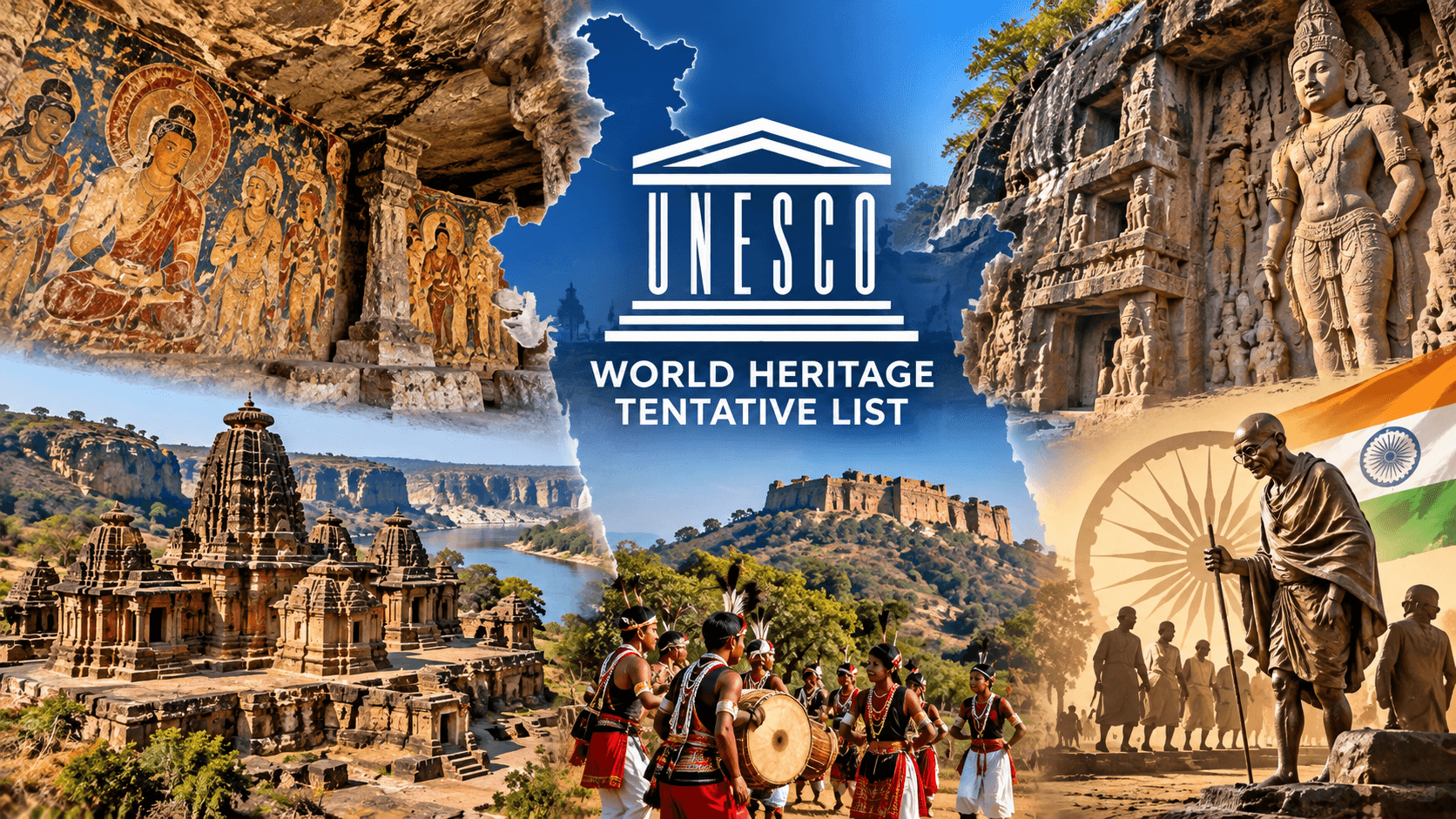
New Delhi: India has expanded its UNESCO World Heritage Tentative List to 78 properties, with five new heritage sites and proposals added to the list. The additions highlight the country’s diverse cultural, historical and architectural heritage. Akashvani News
The newly added entries include the Buddhist murals of the Bagh Caves, the Group of Temples of the Chambal Valley, the Gupta-era Udaigiri Caves and the tribal heritage of Ginnorgarh. The list also includes the Sites of Satyagraha, a serial transnational proposal connecting India and South Africa. Akashvani News
Heritage diversity takes centre stage
The latest additions cover different periods and traditions of Indian history, ranging from ancient Buddhist art and Gupta-era architecture to temple heritage and tribal cultural traditions.
The Bagh Cave paintings are known for their Buddhist artistic traditions, while the Udaigiri Caves preserve important remains associated with the Gupta period. The Chambal Valley temples and Ginnorgarh further represent the architectural and cultural diversity of central India.
The Sites of Satyagraha proposal has an international dimension, connecting heritage associated with the history of the Satyagraha movement in India and South Africa. Akashvani News
What does the Tentative List mean?
Being placed on UNESCO's Tentative List does not mean a site has already received World Heritage status. It is an important preliminary step in the process. Countries must first include a property on their Tentative List before formally pursuing World Heritage inscription.
India's heritage portfolio has also recently gained international recognition with the Ancient Buddhist Site of Sarnath being inscribed on the UNESCO World Heritage List in July 2026, becoming India's 45th World Heritage property. Press Information Bureau
Why it matters
The expansion of the Tentative List could help bring greater international attention to lesser-known cultural sites and encourage conservation, research and sustainable tourism.
It also highlights the breadth of India's heritage, extending beyond internationally famous monuments to include cave art, temples, tribal traditions and historical movements.